I went to Yangon, Myanmar, in late July and early August 2026, during the height of monsoon season. For ten days, I left my hotel with a camera and an umbrella and walked a small area around central Yangon, without a fixer or a sightseeing itinerary. I arrived knowing that the United States advised against travel to Myanmar and that the country was in an ongoing civil war. I expected the conflict and instability to be visible in everyday life. During those walks, it rarely was. What I noticed instead was people working, traveling, worshipping, playing and looking after each other. Ordinary life continued around the railway, the river and the streets of Yangon.
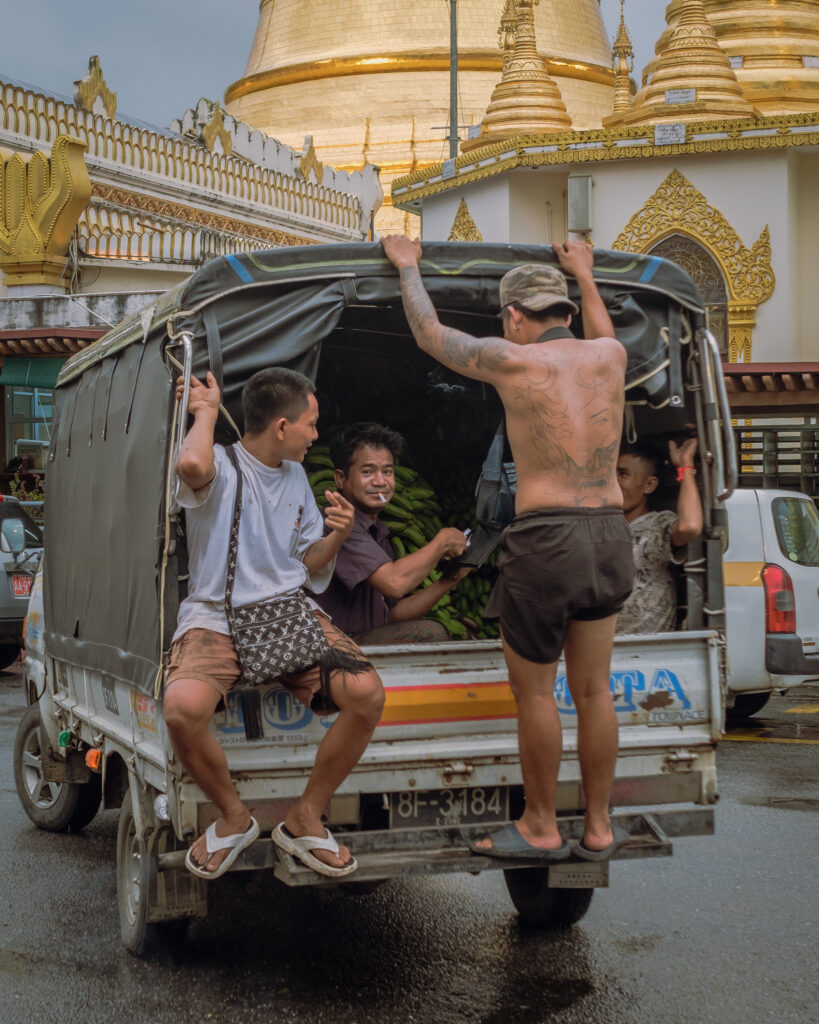
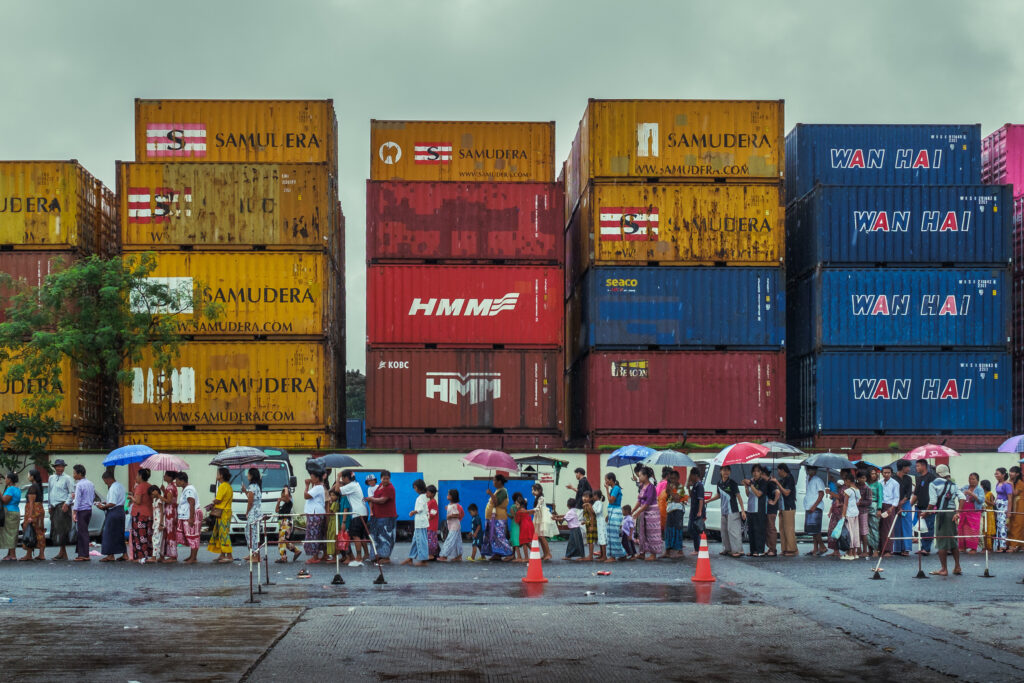
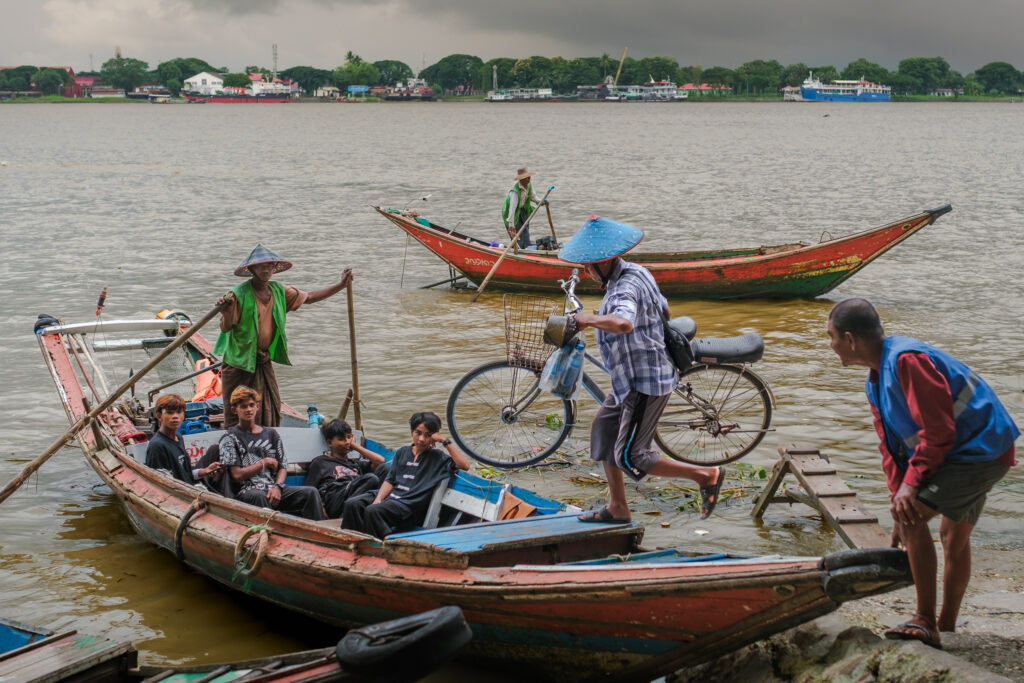
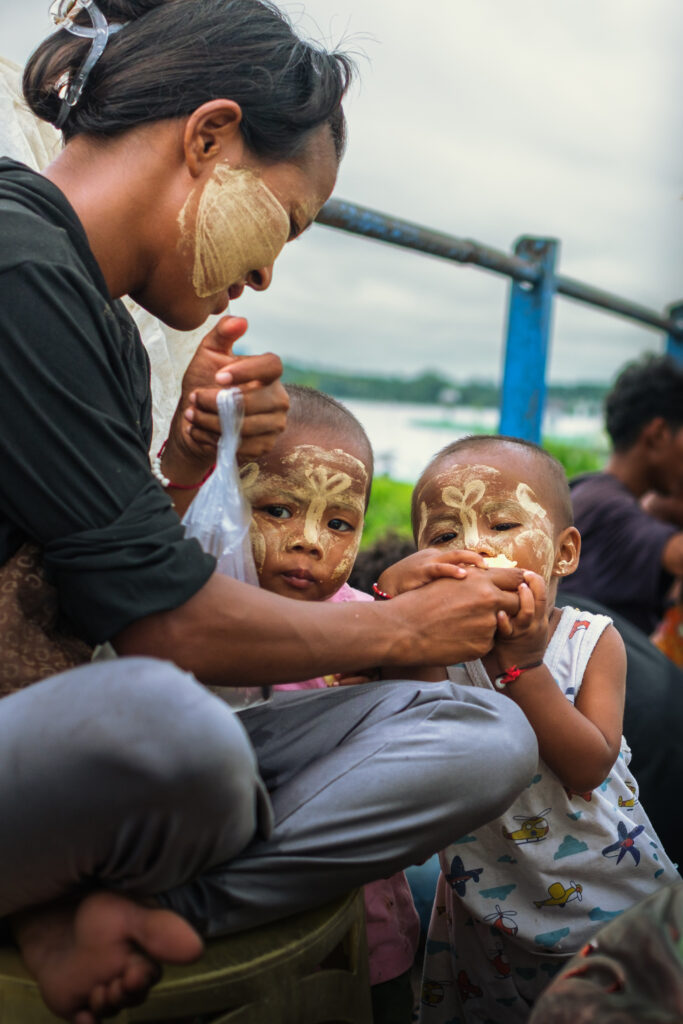
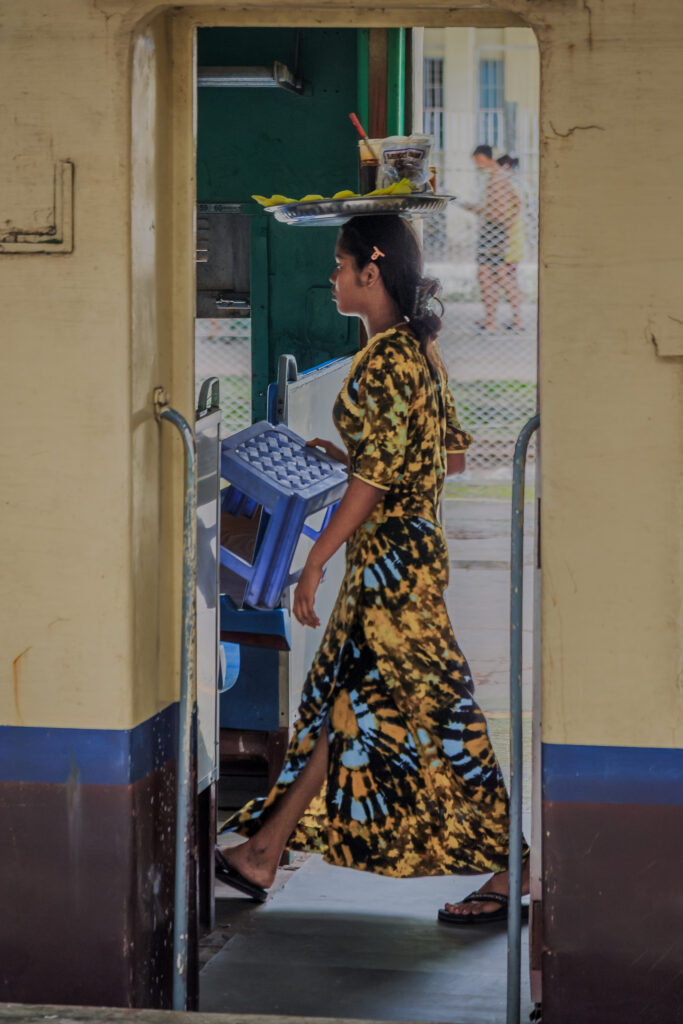
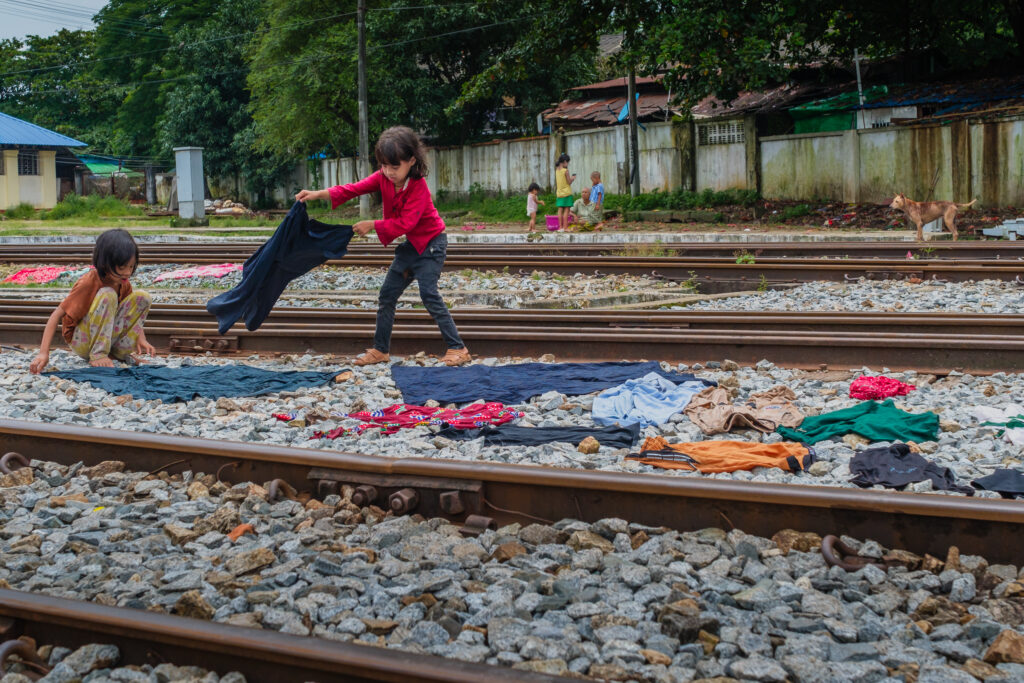
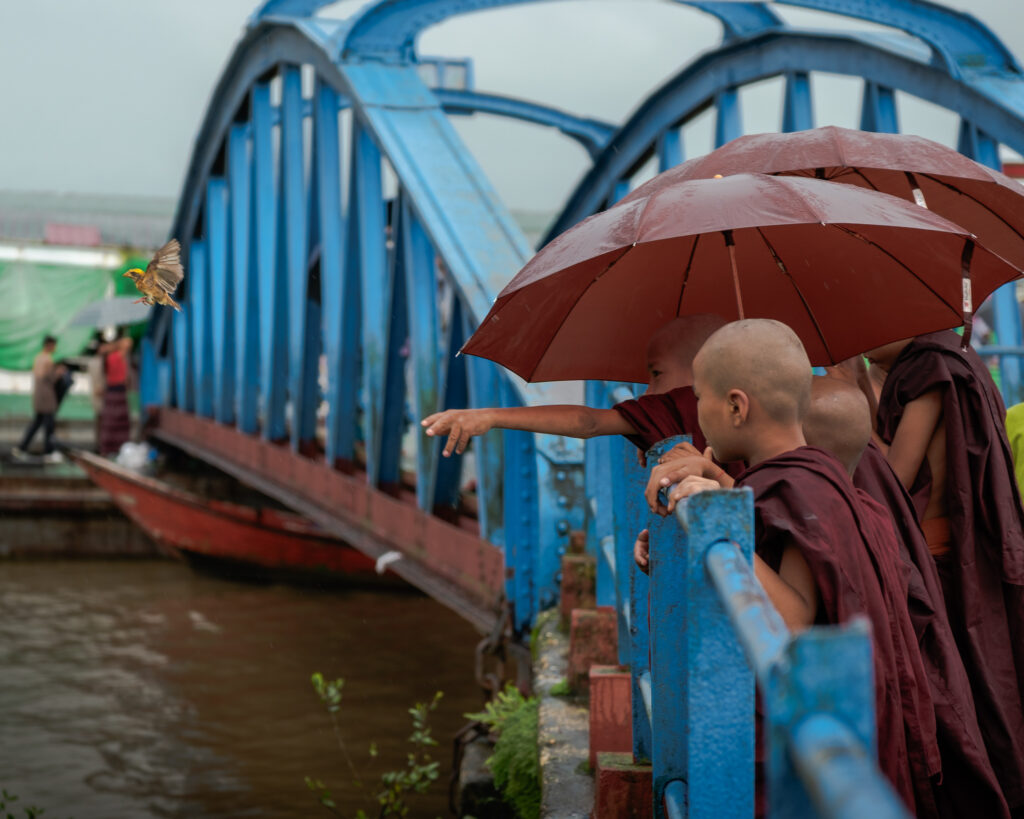
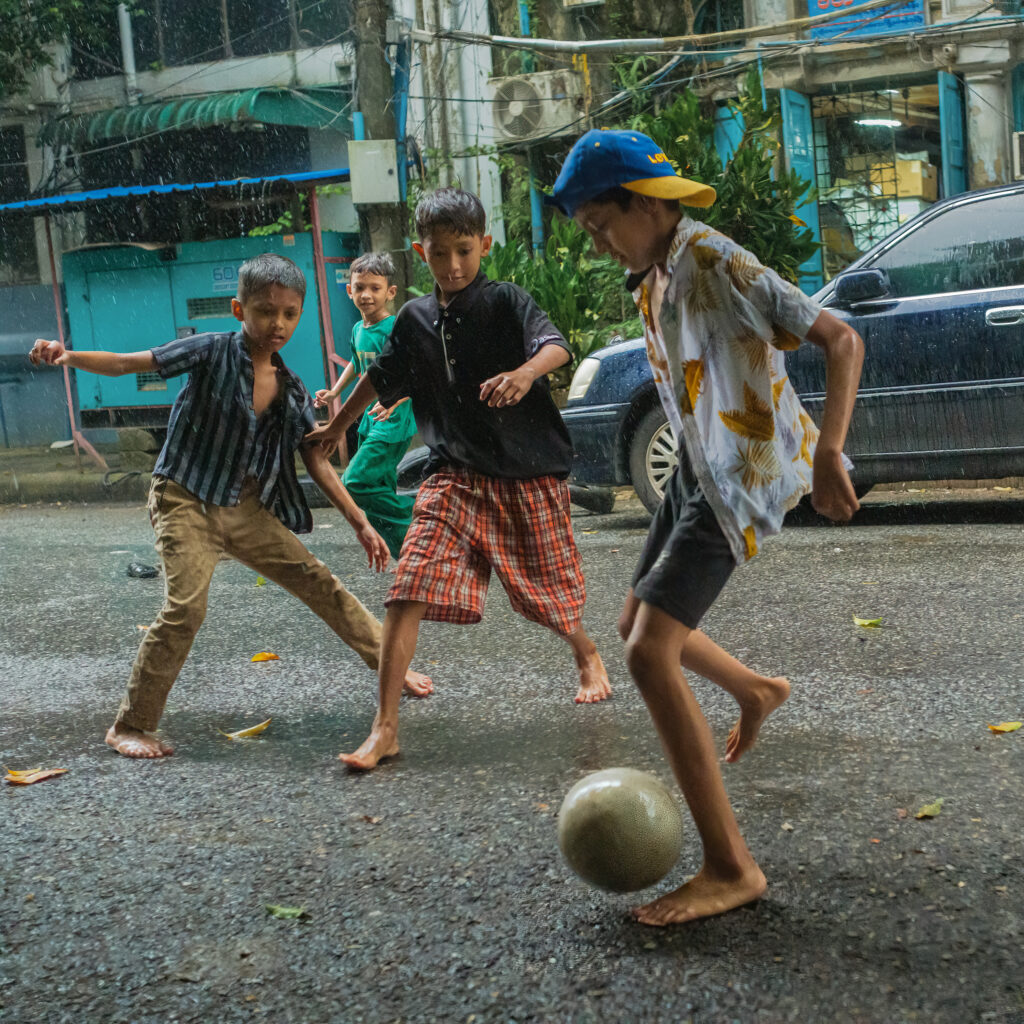
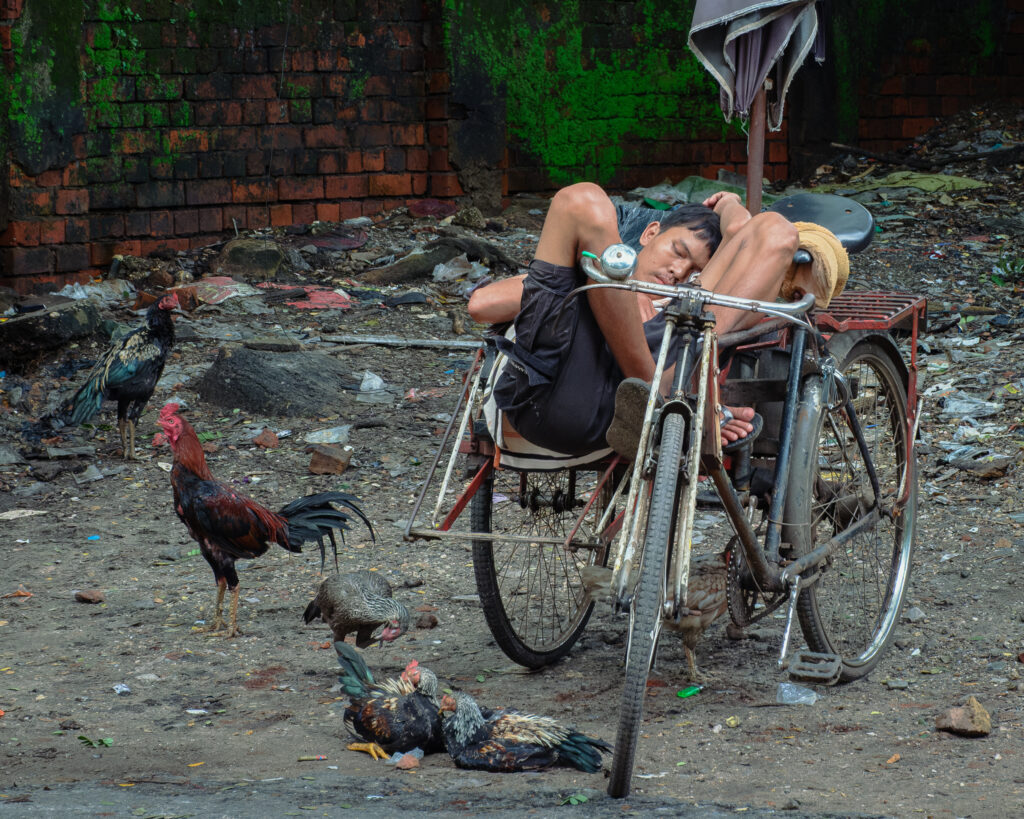
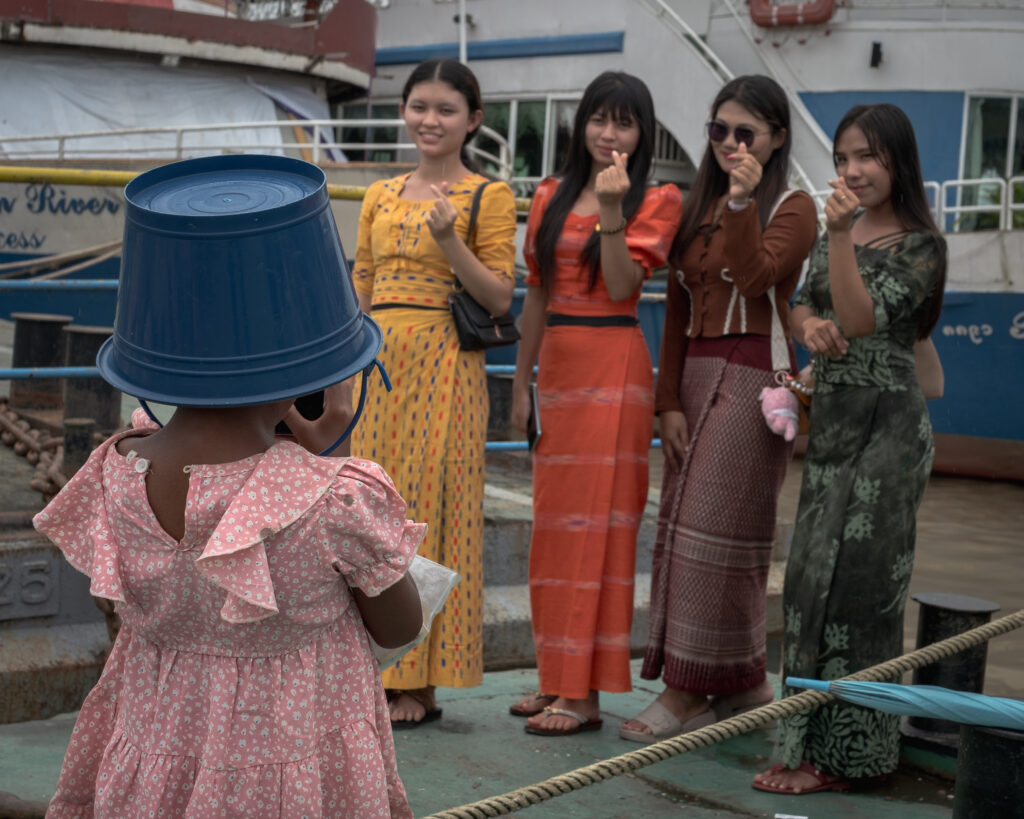
Men ride in the back of a truck loaded with bananas for alms offerings outside Mahar Bawdi Pahtanhti Pagoda in Yangon.People queue for a free bag of chips near Mahar Bawdi Maggin Myaing Park.Passengers and a bicycle board a ferry at a river landing. Ferries are a common means of crossing the Yangon River.A woman selling birds and fish for release shares an apple with two children on a jetty along the Yangon River. Birds and fish are commonly purchased and released as an act of Buddhist merit-making.A vendor moves through a carriage on the Yangon Circular Railway.Girls spread washed clothing to dry between railway tracks near Yangon Central Station. The train tracks function as useful space for people living alongside them.A novice monk releases a bird during Waso full moon day observances.Boys play football in the street during monsoon rains.A man sleeps on a cycle rickshaw in a residential area near the railway.A girl selling snacks from a bucket takes a photograph for a group of women.